Goa Carnival 2026: Parade Routes, Dates & Complete Guide
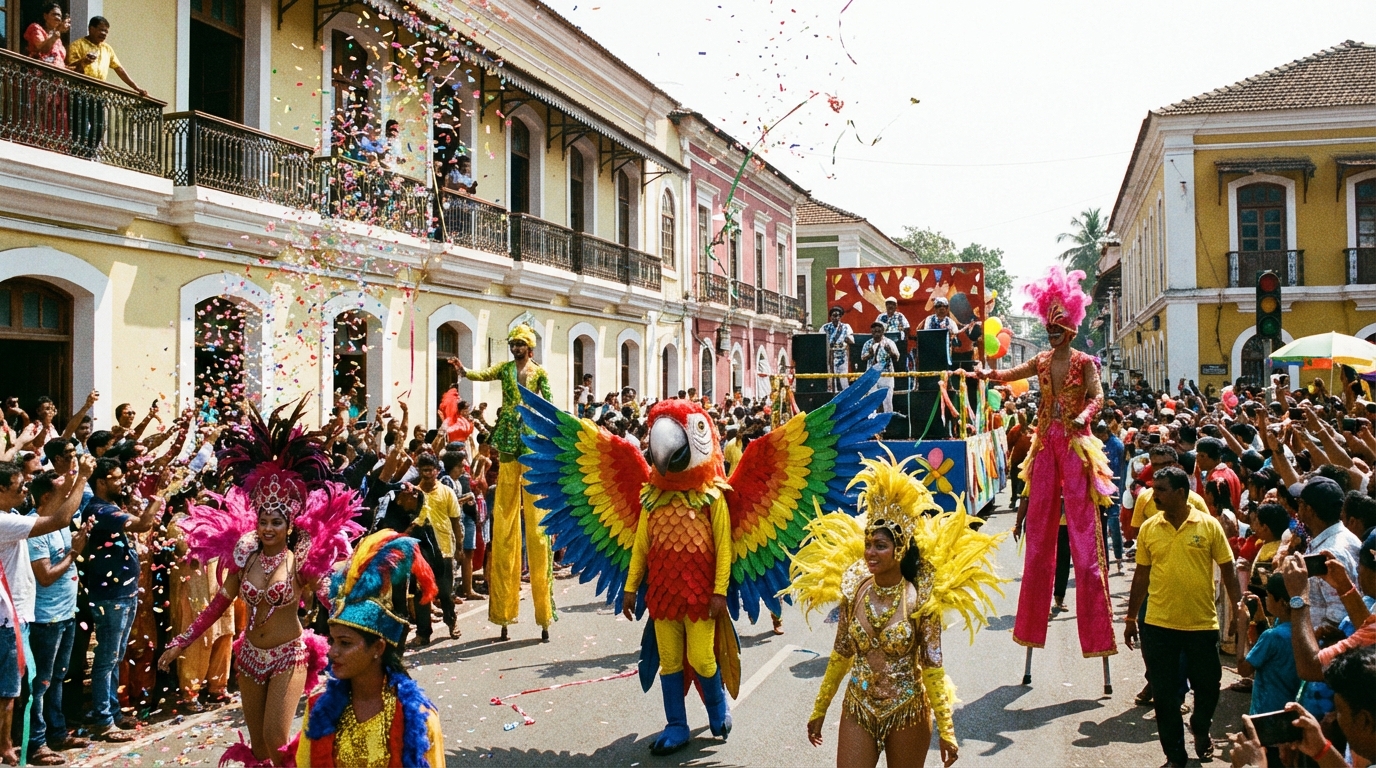
The Goa Carnival is India's biggest and most vibrant street carnival — a riot of colour, music and celebration that transforms the state every year before the period of Lent. If you are planning a trip to Goa in February 2026, timing your visit around the carnival is one of the best decisions you can make.
Dating back more than 400 years to Portuguese colonial rule, the Goa carnival is a unique cultural event with no equivalent anywhere else in India. Often compared to the Rio Carnival in Brazil, it blends Catholic tradition with Konkani folk culture in a spectacle of decorated floats, masquerade parades, live music, dance and pure Goan energy.
Goa Carnival 2026 Dates: February 13 to February 17
The Goa Carnival 2026 runs from February 13 to February 17, 2026. The carnival always falls in the days immediately before Ash Wednesday, marking the start of the period of Lent in the Christian calendar. This means the dates shift each year, so confirming exact timings before you book flights is essential.
The curtain raiser event takes place on the evening of February 13 in Panaji, the state capital of Goa. This opening night features King Momo — a colourful character who symbolically rules Goa during carnival — issuing his royal decree commanding the people to eat, drink and be merry. King Momo's court then leads the first parade through the streets of Panjim, setting the tone for five days of revelry.
Parade Schedule and Routes Across Goa
The carnival parade does not happen in one location. Over the five days, different towns and cities across Goa host their own parades with decorated floats, dancers, bands and performers. Each parade has its own character, from the grand procession in Panaji to smaller, more intimate celebrations in towns like Morjim and Porvorim.
🎭 Panaji (Panjim) — Main Parade
Route: Patto Bridge to Campal Ground (via Andrew's Junction)
The flagship grand parade — the curtain raiser parade starts here on February 13. Expect the largest decorated floats, the biggest crowds and the most elaborate performances. Panaji is where most visitors gather, and the atmosphere along the waterfront is electric. Arrive early to secure a good viewing spot. The city-wise parade routes across Goa all follow this format, but Panaji's is the largest.
🎭 Margao — South Goa Parade
Route: Margao Municipal Council Square (near Milagres Church / Comunidade Building behind Milagres Church)
Margao, the commercial capital of South Goa, puts on a fantastic parade on February 14 (Feb 14) with strong local participation. The atmosphere here is slightly more authentic and less touristy than Panaji, with excellent food stalls along the route.
🎭 Mapusa — North Goa Parade
Route: Comunidade Ground near Dev Bodgeshwar Temple
Mapusa is known for its vibrant Friday market, and the carnival parade here draws heavily from the local community. A great option if you are staying in North Goa near beaches like Anjuna or Vagator. Note: parades in Mapusa and Morjim are on different days, so you can catch both.
🎭 Morjim — Beach Village Parade
Route: Morjim Junction near Raj Super Market
A smaller, more laid-back carnival parade in the beach village of Morjim. Perfect if you want to experience the celebration without massive crowds. Morjim has a strong community feel during carnival season. The Goa Carnival 2026 dates for Morjim fall from February 13 to 17 along with the rest of the state.
🎭 Vasco da Gama — Port City Parade
Route: IHM to ACDIL School
Vasco, Goa's largest city by population, hosts an energetic parade with strong neighbourhood participation and plenty of local food stalls along the route.
🎭 Porvorim — Family-Friendly Parade
Route: Swatantra Path / Holy Spirit Church area
Porvorim's parade is one of the newer additions but has grown significantly in recent years. The route near Holy Spirit Church offers a pleasant setting for families.
Decorated Floats: The Heart of the Parade
The decorated floats are the centrepiece of every Goa carnival parade. Local clubs, associations, schools and businesses spend weeks building elaborate float designs around different themes — from mythological scenes and political satire to celebrations of Konkani culture and Goan identity. Each float is accompanied by dancers in colourful costumes, drummers and brass bands.
Competitions for the best float are fiercely contested, with prizes awarded in categories including best overall design, best use of traditional themes and most creative construction. The level of craftsmanship on display is genuinely impressive, with some floats towering several metres high and featuring moving parts, lighting effects and live performers.
What to Expect: Music, Food and the Period of Lent Tradition
Beyond the parades, the Goa carnival is a state-wide party. Streets fill with live music stages playing everything from Konkani folk songs to Bollywood hits and Western pop. Masquerade balls are held at hotels and clubs across Goa, and impromptu street dances break out in every neighbourhood.
Food is a massive part of the celebration. Expect to find stalls selling traditional Goan dishes — pork sorpotel, beef chops, ros omelette and sweet bebinca. Wash it all down with feni, the local cashew spirit that flows freely during carnival season. The combination of music, food and the warm February weather creates an atmosphere unlike anything else in India.
The carnival tradition is deeply connected to the period of Lent. Historically, it was the last chance for festivity and celebration before 40 days of fasting and abstinence. This connection to the Catholic calendar gives the Goa Carnaval a cultural depth that goes well beyond a typical street festival. The annual carnival — known locally as Goa Carnaval — is a full travel guide in itself, drawing both locals and visitors to the streets of Goa for five days of non-stop revelry.
Tips for UK Visitors Attending Goa Carnival 2026
- Book travel early: Carnival falls in peak season, so confirm your preferred area and accommodation before availability narrows.
- Stay near Panaji: If you want to see the main parade, book accommodation in or near Panaji. Hotels fill up fast during carnival week, so reserve at least two months in advance.
- Expect crowds: The carnival attracts domestic and international visitors in large numbers. Arrive at parade routes at least an hour before the scheduled start time.
- Dress for the weather: February in Goa is warm and dry, with temperatures around 30-33°C. Wear light, breathable clothing and bring sun protection.
- Explore beyond Panaji: Consider visiting the parades in Mapusa or Morjim for a less crowded but equally enjoyable experience. Many visitors split their time between the main Panaji parade and a smaller town event.
- Respect the tradition: The carnival has deep cultural roots in Goa's Catholic community. While it is a party, it is also a tradition tied to the period of Lent. Be respectful of local customs and religious sites.
- Use local transport: Roads are closed for parades. Scooter hire or pre-booked taxis are your best options for getting between parade locations across Goa.
History of the Goa Carnival
The carnival tradition in Goa dates back to the 18th century during Portuguese rule. It was originally a period of feasting and celebration before the fasting of Lent, mirroring similar traditions in Portugal, Brazil and other Catholic cultures. After Goa's liberation from Portuguese rule in 1961, the carnival was briefly discontinued but was revived by the Goa government in the 1960s as a way to preserve the state's unique cultural heritage.
Today, the Goa Carnival 2026 continues to evolve while honouring its roots. The curtain raiser ceremony with King Momo, the Konkani folk performances and the float parade traditions all connect the modern celebration to its centuries-old origins. It remains one of Goa's most important cultural events and a powerful expression of Goan identity.
Whether you are a first-time visitor or a returning regular, Carnival offers a side of Goa you cannot experience at any other time of year. Mark the dates, choose your base and plan the busiest events before you arrive.
🏨 Book Hotels & Experiences
Get the best deals on accommodations and activities with Klook
Find Hotels →