Goan Cuisine: The Complete Guide to Food in Goa for UK Visitors
Goan cuisine is one of the most distinctive and flavourful regional cuisines in India. Shaped by 450 years of Portuguese colonisation, the spice trade routes of the Arabian Sea, and the natural abundance of Goa's coastal waters, the food in Goa is unlike anything you will find elsewhere on the subcontinent. For UK travellers — whether you are of Goan heritage or discovering the local cuisine for the first time — eating your way through Goa is one of the great pleasures of any trip. This is a foodie travel destination like no other.
Goan food and Goan cooking are built on a foundation of fresh fish and seafood, coconut milk, tamarind, kokum, cashew nuts and a complex layering of Goan spices that creates depth without overwhelming heat. The Portuguese left behind vinegar-based cooking techniques, bread culture and a tradition of pork dishes that set Goan cuisine apart from the rest of India. The result is a spicy, coastal local cuisine where you'll find dishes that originated from a Portuguese sailor's influence but have been transformed by centuries of typical Goan innovation.
Fish Curry Rice: The Soul of Every Goan Dish
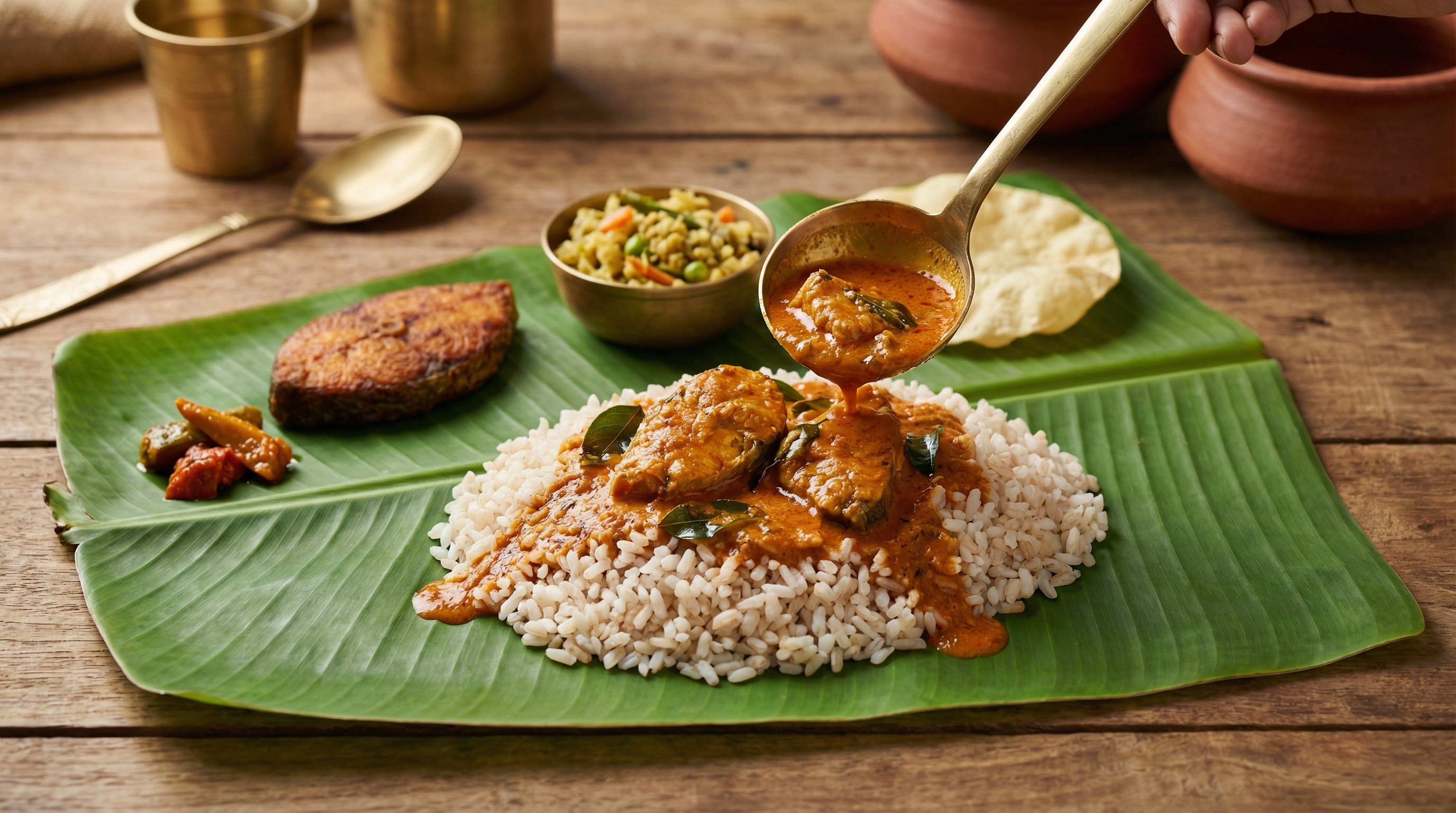
If there is one dish that defines Goa, it is fish curry rice. This is the daily staple — the meal that every Goan household eats, often twice a day. The curry is made with freshly caught fish (typically kingfish, mackerel or pomfret), simmered in a coconut milk base flavoured with kokum, tamarind, chilli, turmeric and a blend of roasted spice. The tartness of the kokum balances the richness of the coconut, creating a flavour profile that is simultaneously comforting and complex.
For UK visitors used to the thicker, creamier curries found in British Indian restaurants, Goan fish curry will be a revelation. It is lighter, tangier and far more delicate. The best versions are found not in tourist restaurants but in small local taverns and family homes. If you are invited to eat fish curry rice in a Goan home, say yes without hesitation — it will be the best meal of your trip.
Vindaloo: Nothing Like the UK Version
The word vindaloo is derived from the Portuguese carne de vinha d'alhos — meat marinated in wine vinegar and garlic. The original Goan vindaloo is a world away from the nuclear-hot dish served in British curry houses. Authentic pork vindaloo uses a carefully balanced paste of dried red chilli, cumin, black pepper, cinnamon, cloves and plenty of garlic, mellowed with palm vinegar. The result is a rich, tangy Goan curry with serious depth of flavour and a warm (not scorching) spicy heat from dried red chillies.
Pork is the traditional meat for vindaloo in Goa, reflecting the Catholic community's culinary traditions. You will also find chicken and prawn versions. The flavour improves when made a day ahead, which is why vindaloo is a favourite at Goan feasts and celebrations. If you think you know vindaloo from your local takeaway, prepare to have your understanding completely rewritten.
Xacuti: The Spice Masterclass
Xacuti (pronounced "sha-koo-tee") is one of the most complex and rewarding dishes in Goan cuisine. This rich curry uses a spice paste made from toasted coconut, poppy seeds, star anise, nutmeg, mace, black pepper, dried chilli and a dozen other spices, all dry-roasted and ground fresh. The depth of flavour in a well-made xacuti is extraordinary — warm, aromatic, slightly sweet and deeply savoury.
Chicken xacuti is the most common version and is usually served with steamed rice, though you will also find it made with lamb or prawn. The dish takes time and skill to prepare properly, and finding a restaurant that does it well is a mark of quality. Xacuti represents the best of Goan spice craft — a cuisine that uses complexity rather than raw heat to create flavour.
Catholic Goan Cuisine vs Hindu Goan Cuisine
One of the fascinating aspects of Goan food is the clear distinction between Catholic Goan cuisine and Hindu Goan cuisine. Both traditions share many ingredients — coconut, kokum, seafood, spice — but differ significantly in technique and key ingredients.
Catholic Goan Cuisine
Heavily influenced by Portuguese cooking. Uses pork and beef freely. Vinegar-based marinades and curries (vindaloo, sorpotel, chouricos). Bread culture — pao (bread rolls) served with every meal. Rich desserts using eggs, sugar and coconut (bebinca, dodol). Feni and port wine drinking traditions. Dishes tend to be richer with more complex spice blends.
Hindu Goan Cuisine
Uses coconut and kokum extensively but avoids beef and pork. Fish curry rice remains the staple, served with rice and grated coconut. Relies more on jaggery, tamarind and kokum for souring agents rather than toddy vinegar. Vegetarian dishes feature prominently — dalithoy (lentil curry), khatkhate (mixed vegetable stew with locally grown vegetables), and various bhaji preparations. You can eat in Goa at a vegetarian restaurant and have a spectacular meal. If you want to try in Goa the full range of local Goan food, seek out both Hindu and Catholic establishments. Sweets use jaggery and coconut rather than eggs. The flavour profile tends to be slightly lighter and more spicy coconut-forward.
Both traditions produce magnificent food. A good Goan food tour should cover dishes from both sides to get the full picture of this diverse cuisine.
Seafood: From the Arabian Sea to Your Plate
Goa sits on the Arabian Sea coast, and the seafood is exceptional. Beyond fish curry, there is a wealth of seafood dishes to explore. Prawn balchao is a fiery pickle-style preparation where prawn are cooked in a paste of dried red chilli, vinegar and spice until the flavours intensify into something extraordinary. Recheado is a whole fish (usually mackerel or pomfret) stuffed with a bright red masala paste of chilli, garlic, ginger and vinegar, then pan-fried until crisp. Caldeirada is a Portuguese-influenced seafood stew layered with vegetables.
Prawn curry with coconut milk is another staple — simpler than xacuti but beautifully flavoured with fresh green chilli, curry leaves and a squeeze of kokum. Tiger prawn, squid, crab, lobster and clams all feature on menus across Goa. On any visit to Goa, the quality of the seafood — caught daily by local fishermen — is consistently outstanding.
Street Food in Goa: Quick Bites and Local Flavour
Goan street food deserves its own chapter. The ros omelette is a beloved Goan creation — a fluffy omelette served on a plate of spicy chicken or mutton curry gravy (the "ros"). It is cheap, filling and addictive. You will find ros omelette stalls at markets, roadsides and near bus stands across Goa.
Pao — soft white bread rolls — are a Portuguese legacy that Goa has made entirely its own. Pao bhaji (bread with spiced vegetable curry) is eaten for breakfast across the state. Choris pao — Goan pork sausage (chouricos) in a bread roll — is a fantastic snack found at local bakeries and markets. Other street food highlights include samosas, batata vada (spiced potato fritters), and fresh fruit with chilli and salt.
Bebinca: The Queen of Goan Desserts
No guide to Goan cuisine is complete without bebinca. This layered pudding is the crown jewel of Goan desserts — a rich, dense cake made from coconut milk, jaggery, egg yolks, flour and ghee, baked one layer at a time. A traditional bebinca has seven layers (representing the seven hills of Lisbon, according to legend), though some versions have up to sixteen.
Making bebinca is a labour of love that takes hours of careful baking. Each layer must be cooked individually under a hot flame before the next is poured on top. The result is a golden, caramelised dessert with a unique texture — somewhere between a pudding and a dense cake. Bebinca is traditionally served at Christmas and weddings but is available year-round in Goan bakeries and restaurants.
Other Goan desserts worth seeking out include dodol (a sticky, fudge-like sweet made from jaggery and coconut milk), neureos (crescent-shaped pastries filled with sweetened coconut), and kulkuls (deep-fried curled dough pieces rolled in sugar).
Feni: Goa's Spirit of Choice
Feni is Goa's indigenous spirit, distilled from either cashew fruit or coconut palm sap. Cashew feni is the more famous variety — a clear, potent spirit with a distinctive fruity aroma that divides opinion sharply. You either love it or you do not. Coconut feni (also called toddy feni) is milder and slightly sweet.
Urrak is the first distillation of cashew feni — lighter, slightly fizzy and very refreshing when served chilled. It is only available during the cashew season (March to May) and is worth trying if your visit coincides. Port wine, another Portuguese legacy, is also widely drunk in Goa and is often served with Goan desserts.
Where to Eat: Beach Shacks vs Local Taverns
Beach Shacks
Great for atmosphere, sunset views and fresh seafood. Popular along the beaches of North and South Goa. Prices are higher than inland. Best for: grilled fish, prawn curry, cold beer. Quality varies — ask locals for recommendations rather than following the crowds.
Local Taverns
Where Goans actually eat. Found in towns and villages away from the beach. Serve authentic Goan food at a fraction of beach shack prices. Best for: fish curry rice, vindaloo, xacuti, ros omelette. The flavour is almost always better than tourist-facing restaurants.
For the most authentic Goan experience, split your meals between beach shacks (for the setting) and local taverns (for the food). The markets in Mapusa and Margao also have excellent food stalls worth exploring.
Goan Restaurants in the UK
If you want to try Goan food before your trip — or satisfy cravings between visits — there are several Goan restaurants across the UK. London has the strongest selection, but you will also find Goan eateries in other cities with significant Goan communities. Look for restaurants that specifically advertise Goan cuisine rather than generic Indian — the flavour profile is entirely different. Key dishes to order: fish curry, xacuti, cafreal chicken, prawn balchao and bebinca.
Goan food is one of the great undiscovered cuisines for most British diners. The combination of Portuguese technique, Indian spice, tropical coconut and fresh seafood creates a flavour experience that stands apart from any other regional cuisine in India. When you visit Goa, eat adventurously, eat locally, and eat often. Your taste buds will thank you.
🏨 Book Hotels & Experiences
Get the best deals on accommodations and activities with Klook
Find Hotels →